





The most beautiful beaches of Sicily, on the south shore of Siracusa. Some of them are easily locatable and accessible by private car or public transport.
Not really beaches in Siracusa. Of course you can swim and do sunbath in Ortigia.
But if you’d like to enjoy some of the most beautiful beaches in Siracusa, you don’t have to move too much.
Some of them are accessible by public transport, bus and train station are just 50 meters far away from the Hotel. Or by private car and bikes, following easy road signs.
Within small walking distance, it is a great solution to enjoy sunbathing and let cool by sea breeze just in town. This Solarium (summertime installation) is currently the only one in Ortigia Island with free admission. It has an unbeatable location, with an excellent sun exposure all day long

A very tiny and artificial pebbly beach, made of stones smoothened and polished by sea and wind. It is accessible from a long stairway down waterfront. It is enclosed by aring of breakwaters, where you can easily enjoy morning sunbathing. A quiet place with a unique viewpoint.

Probably the most beautiful beach in Siracusa. Small bay, white shining smooth sand and spectacular crystal clear sea.
HOW TO GET THERE
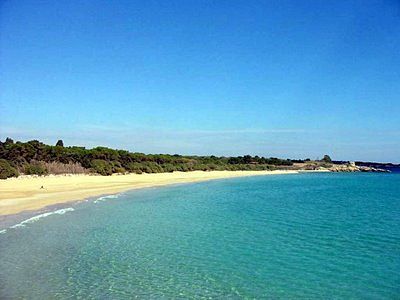
The most popular and fashionable beach in Siracusa. All along the coast there are beach clubs, resorts and public areas to enjoy swimming and sunbathing. After sunset, it becomes the ideal destination for nightlife: open clubs, discos and pubs, dedicated to visitors of all ages, and is very popular among locals and travellers.
HOW TO GET THERE
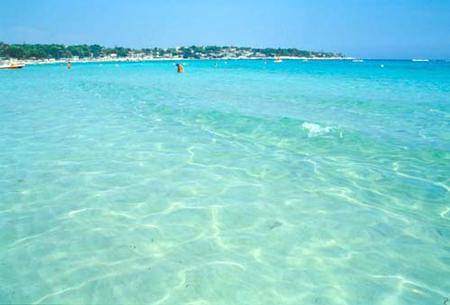
A natural reserve located along the south-eastern coast of Siracusa. Rocky shoreline, beautiful cliffs, fascinating caves, small beaches, natural cavities and arches. Rich in suggestive marine flora and fauna biodiversity, with emerald green and turquoise waters. It is the ideal location for scuba diving lovers.
HOW TO GET THERE
It can be reached only by car or motorbike (10 minutes far from Siracusa).
After crossing bridge Umberto, go straight on and past the train station; once you are at the big roundabout turn left on Via Columba, then right on Via Elorina. Now you are on the right way. Follow road signals up to Plemmirio Natural Reserve.

This coast, presents an alternation of low and high rocky cliffs overlooking the sea, white sandy coves and several underwater sea caves surrounded by crystal waters. Offshore, there is a deserted island that can be reached by swimming. In a small bay you will also find a tiny harbour. All the area is an enchanting place where you can enjoy sunbathing, snorkeling and simply lose yourself in a fascinating and unspoiled nature.

It is a wonderful beach close to river Cassibile. There are no beach resorts, just a wild one with free entrance. But the parking is quite expensive (the only and one solution to leave your vehicule).
HOW TO GET THERE
It can be reached only by car or motorbike (15 minutes far from Siracusa).
After crossing bridge Umberto, go straight on and pass the train station; once at the big roundabout follow road signs towards “Noto-Avola” and all the directions (Catania included). Keep going straight on, past the cemetery and then turn left following road signals to Gela-Noto-Avola Rosolini. Now you are on the motorway Siracusa-Noto-Avola-Rosolini; road exit name is CASSIBILE, which lead you towards the SS115 to Avola. After 3.5 km you will cross a bridge, you will see a rural building named “Foce del Cassibile”, so slow down and turn right following the signal “Pineta of Gelsomineto”.
After few meters you reach parking entrance.
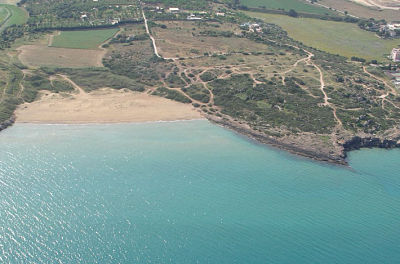
Marianelli is the closest and one of the most beautiful beaches of Vendicari. It is located right next to the ruins of Eloro.
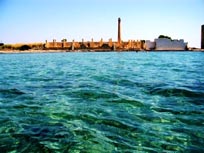
This is the wonderful beach that can be easily reached from the main entrance of Vendicari Reserve. Pure clean water and a huge sandy beach near the ruins of an old tuna fishery.
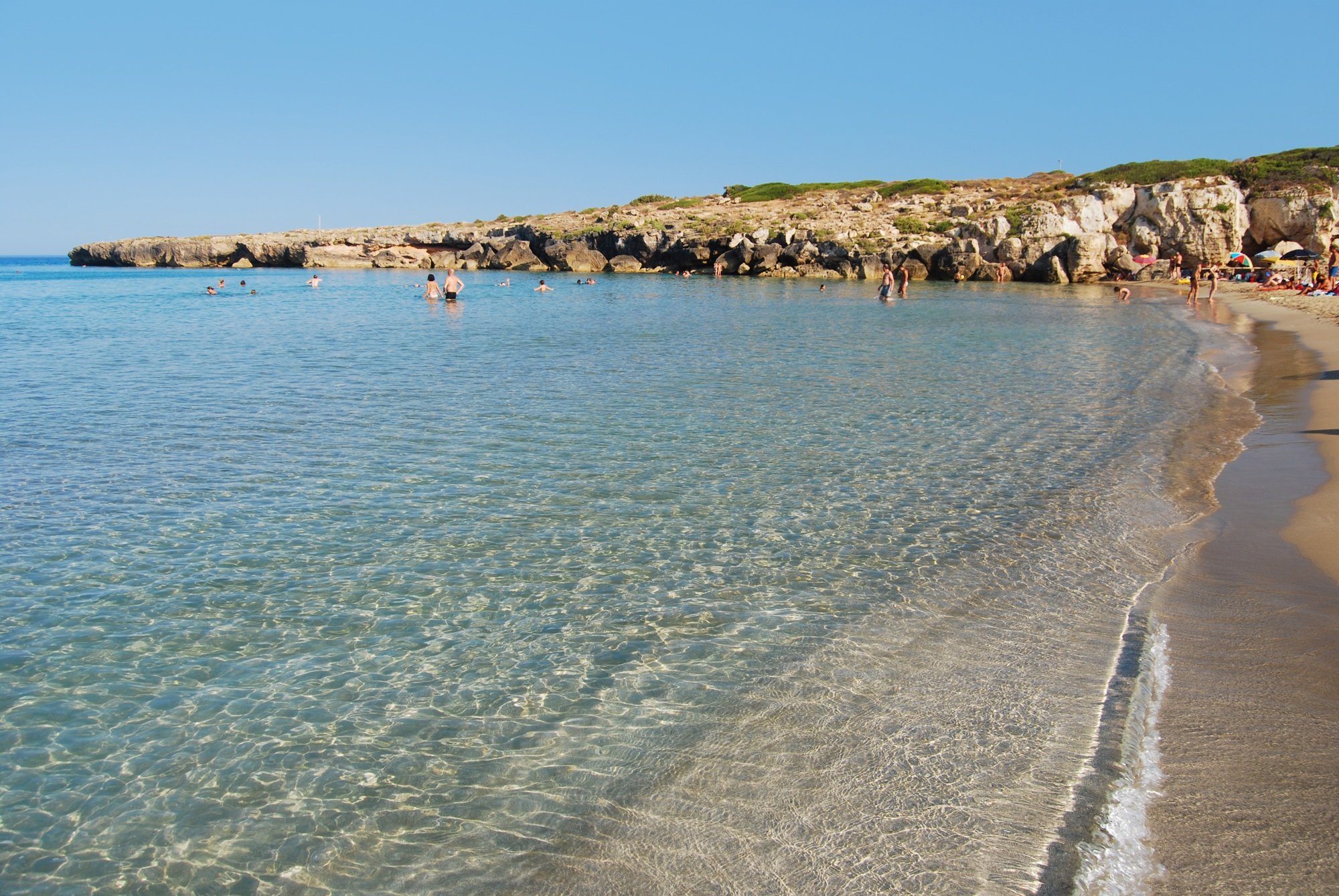
It is the most beautiful beach of Vendicari natural reserve, with golden sandy beaches and Caribbean Sea.
San Lorenzo – Case Cittadella is a breathtaking huge sandy beach with turquoise water, located in the south side of Vendicari reserve. Here in summer the Caretta Caretta turtles leave their eggs.
Beautiful, unspoiled beaches where the Mediterranean meets the Ionian Sea close to the most southern point of Sicily, in the province of Syracuse.
CavaGrande is a deep valley, called canyon by some people, formed by the non stop erosionof the Cassibile river during the passing of the centuries, the river created over the centuries a series of deep canyon in the limestone of the hyblean mountains. In the valley, has come to form a complex system of small waterfalls and natural reservoirs where often it’s allowed to swim in. It is about ten kilometers long, a maximum width of more than one thousand meters (at the confluence with the valley Passetti), and a maximum depth of over 300 meters. The highest altitude reached the plateau on the bed of the river is 520 m above sea level, but it is close to the viewpoint of Avola Antica, with its 507 meters, that the river reaches its maximum depth. In this section it reaches its maximum width of 1200 meters. In the 10 km length of the canyon, as mentioned, you can admire lots of lakes, with fresh and clear water, among which stand out for their beauty small lakes near Avola Antica accessible to the public through a historical scale, called Scala Cruci. Cava Grande is known almost entirely for the lakes accessible from the path “cruci-scale” from the viewpoint that goes down to the valley floor. But Cava Grande, in fact, it has dozens of trails that allow you to reach every part of it. Defended by inaccessible sheer cliffs of the quarry and the proximity of water, the Sicilians, who were maybe the first inhabitants of this place, built two rock villages, still difficult to reach and which now became part of the landscape. Around the thirteenth century BC, some citizens of south-eastern Sicily, perhaps driven by the more aggressive Italic citizen, preferred to take refuge in these inaccessible and well defended places. At least two rock settlements are known, the northern one that you can notice as soon as you get a view from the lookout, and the southern, in the almost opposite side. The first dates back to the XI-X BC, according to suggestion only second after Pantalica, where there are hundreds of cave tombs and early Christian tombs carved into the walls, arranged side by side, on six different parallel levels. The mouth of the river Cassibile is a hystorical place, as the captain Demosthenes in 413 BC with 6,000 Athenians had to surrender to the city of Siracusa. These places were exploited until the first half of the last century. In fact, just above the ponds there was a monastery, which you can still see the ruins of and the homes of some families of Canicattini as Bombaci and Bird, who drew sustenance from the production of olive, carob and almond. On the north side you can see a small cluster of cave dwellings. In the south there is a complex system of houses dug into the rock, placed side by side on six different parallel levels, connected by a system of tunnels and galleries. While the edge of the reserve, north-east, there are several ancient necropolis, in which were found rich grave goods and ceramic material: its unique decoration, called feathered or marbled, is part of the Ausonia culture which lived in the Aeolian islands and in eastern Sicily around the 1000 BC.
To learn more: http://www.cavagrandedelcassibile.it
Indirizzo: SS115 – 96013 Avola Siracusa
Coordinate: N 36.967587 – E 15.093988
Theme of 2020 season: “what lies beneath”, scenes and characters that presents themselves in an opposite way to what they really are.
These are the texts chosen, because in all three you can find hidden truths.
Starting from last Euripides tragedy The Bacchae, where every truth overshadows its opposite, to Euripides Iphigenia in Tauris where every reality believed is false; follows Aristophanes The Clouds, where every faith proves to be illusory.
Further information and tickets learn more
BOX OFFICE INDA:
Corso Matteotti 29, Siracusa
From Monday to Friday, 10:00 – 13:00 / 15:00 – 17:00
Tel: 800 542644
Tel: +39 0931 487248
The Museum of Papyrus is created and managed by the International Institute of Papyrus. It is not just a museum exhibition, but also a museum where activities of studying, teaching and researching provide information about: papyrus origin (River Cyane and Arethusa source) and preservation, ancient papyrus manufacturing techniques and papyrus documents restoration.
It is found inside the former convent of St. Augustine, property located in the historical center of Siracusa. You will find various sections: the museum display, the library, an hall for temporary exhibitions, educational workshops as well as the “International School of Restoration of Papyrus”.
Info Tel: 0931.22100 – 0931.61616
Tuesday – Saturday: 10:30 – 18:00
Holidays: 10.30 – 14:00
Tuesday – Sunday: 9:30 – 14:00
The amazing ancient art Museum is situated precisely in the core of Ortigia, just close to Piazza Duomo and Arethusa Spring. It preserves the huge painting of Antonello da Messina “The Annunciation”, originally painted for the Church of Annunziata in Palazzolo Acreide; it was depicted on board in 1474 then transported on canvas,
The Gallery was founded in 1940, to host the collection of the National Archaeological Museum of Modern and Medieval Art. It was moved into Palazzo Bellomo to valorize and promote the incredible artwork coming from churches and desecrated convents of Siracusa and other locations in eastern Sicily, and from purchase orders and donations. The museum documents the evolution of figurative culture in Siracusa, and in the south-eastern area of Sicily, and it is designed according to a criterion strictly chronological.
VISIT AND BOX OFFICE TIME (Tel: 0931. 69511)
From Tuesday to Saturday 9:00 – 19:00, Sundays 9:00 – 13:00
Monday: closing day
The castle is named to Giorgio Maniace, who was a Byzantine general. In 1038 he conquered Siracusa after defeating the Arabs. The castle was built in Swabian Style, stands on the tip of Ortigia Island, in defense of the natural harbour known as Porto Grande. It was designed by Riccardo Lentini between 1232 and 1240 on behalf of Emperor Frederick II, as the symbol of his power and genius.
In 1288 King Peter III of Aragon lived there with his family. The Castle was part of a series of watch points scattered along the coasts of Sicily; it looks like a towering structure of 51 meters per side, with four rounded and angular towers, built combining Swabian, Byzantine and Arab culture features.
The entrance portal is on west side, a beautiful ogival arch topped by the imperial symbol of Charles V (XVI A.D.) representing an eagle with two heads. Laterally the portal, there were two bronze rams, currently one of them is preserved at the archaeological museum in Palermo while the other has been lost or destroyed. Near the west tower there was the so-called Bath of the Queen, believed to be a spacious place adorned in marble, with seats and tanks, but actually it known as a source of fresh water supply for the castle.
At the end of the sixteenth century, Maniace Castle became a focal point of city walls fortification. In Napoleonic period it undertook military functions and was equipped with guns. Then was used as a repository of military equipment up until the end of the Second World War. Occured demilitarization works of the entire area. Have been made radical and several restoration and renovation works, the last completed in 2010, which reported the castle to its former glory.
The beauty of the Duomo dominates the shining limestone and marble square Piazza Duomo. Its structure treasures one of the most important and famous Doric monument in all Sicily: the Temple of Athena. The Greek Temple is dated to 480 b.C., wanted by the tyrant Gelone according to the victory against Cartago in the battle of Himera. Currently are clearly visible almost all columns and some parts of the interior chamber. Then in the 6th century the Byzantines converted the temple into a church: included the exterior colonnade in the outer walls of the church and opened eight arches on each side of the interior chamber to create a building with three naves, dedicated to Virgin Mary. In the 7th century the bishop Zosimo moved the cathedral’s seat to the Duomo (which previously was in San Giovanni’s church).
Anyone looking for Sicilian food products will find a delicious assortment good enough to turn heads in the market stalls and shops, especially on the seaside, from cheeses to meat to wines and spirits and even expensive spices. For those who are flying, it is best to check with your airline in advance as to the restrictions and regulations for transporting some of these goods (especially liquids, which are not allowed in carry-on baggage, or fresh food, which is not always permitted on certain international flights). Do not forget to try the sheep’s cheese, the cheese with chili peppers, seasoned olives, dried tomatoes . . . all at remarkably affordable prices.
The market is colorful and lively and, as in many markets, is characterized by the cries of the vendors. It is not, however, the chaotic atmosphere of a North African souk; on the contrary, what is surprising is that absolute order reigns in certain stalls, with piles of produce stacked in meticulous rows and aligned with geometric precision.
It’s best to go as early in the day as possible, especially in the warmer months, not only to avoid the heat of the South but also to ensure the best selection of goods (and of course to have the rest of the morning available for other activities). The market vendors are accustomed to the presence of tourists and are very kind to them, and, if they are not too busy with customers, they will happily explain how to cook or prepare a product, how to accompany a dish, or they might even suggest a traditional recipe. Such assistance is invaluable especially for the fish, as many species for sale will be very unfamiliar to non-locals.
Those who visit the market at lunchtime can also choose to stop at the Fratelli Burgio deli (on the side opposite the sea). This deli specializes in regional products (sausages, cheese, wines and liqueurs, cakes, seasoned olives, and so on). The back of the shop is filled with tables on which you can eat what you just purchased at the counter. If you prefer, you can ask for a tasting platter with assorted delicacies (cheese, sausage, olives, tomatoes, or smoked fishes). Everything is very basic: if the chairs are occupied you simply eat standing – either way, the tastiness of your Sicilian treats will resonate. And if any unusual product leaves you feeling uncertain, no problem: just ask for a taste (Please note: at dinner, this is not an option)..

© 2020 Hotel Posta Siracusa - Privacy & Cookie policy