





El museo se encuentra en el interior de un antiguo edificio histórico. Exhibe 60 máquinas que son recreaciones de inventos diseñados por los dos genios, Leonardo Da Vinci y Arquímedes de Siracusa, juntos con paneles con información. Sin embargo, no es un típico museo tradicional. Puedes admirar y tocar los objetos, observar sus mecanismos y comenzar a entender cómo funcionan.
Ofrece una fascinante, educativa y divertida experiencia.
Un itinerario al descubrimiento de los antiguos vestigios del significativo pasado de la polis Siracusa, dentro de la área arqueológica del Parque Neapolis.
Gracias a las excavaciones que datan de la mitad del siglo XX, se restablece el aspecto original del sitio, convirtiéndolo una vez más a epicentro de la ciudad: un área de unos 35 hectáreas donde se encuentran los mas importantes y antiguos monumentos de la Siracusa griega juntos a un contexto natural excepcional.
Todo el parque sigue el diseño original del tirano Dionisio I que en 405 a.C. transformó el barrio de la Neapolis en una zona monumental.
Se encuentran:
Las playas más linda se encuentran en la costa sur de Siracusa. La mayoría se alcanza rápido y con facilidad, tanto en coche como en transporte público.
Se puede tomar sol y baño también en Ortigia, pero no hay playas auténticas en Siracusa. No hay que viajar demasiado para conseguirlas. La estación de autobús y tren se encuentra a poco más de 1 km de l’Hotel, y también en coche o motos es suficiente seguir las pocas señales viales.
A unos metros de l’Hotel se encuentra este solárium, realizado provisionalmente para la temporada de verano. Es el único gratuito en Ortigia; además tiene una ubicación excelente, bajo el sol todo el día.

Una pequeña playita artificial hecha de piedras modeladas por el mar y el viento, donde se baja por una larga escalera. Es el lugar perfecto para relajarse y disfrutar de las mañanas soleadas.

Probablemente la playa más bonita de toda Siracusa. Una hermosa bahía de arena blanca y especial agua turquesa.
CÓMO LLEGAR
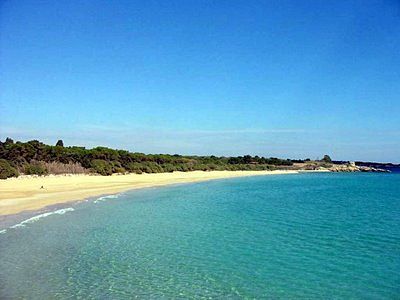
Seguramente la playa más conocida y famosa de Siracusa. Popular y frecuentada por los ciudadanos y potr los turistas, de cualquier edad. A lo largo de la bahía hay muchos balnearios, durante el día se disfruta del sol, del arena blanca y del mar precioso; por la noche abren una serie de locales, bares y discotecas.
CÓMO LLEGAR
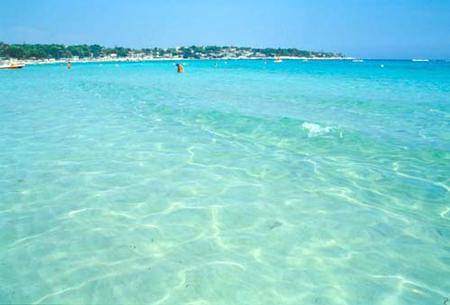
Hermosa reserva natural en la costa sur-este de Siracusa. Arcos de roca, acantilados, fascinantes cuevas, piscinas naturales. Área rica en flora y fauna, mar clarísimo ideal para nadar y hacer esnórquel.
CÓMO LLEGAR
A 10 minutos
It can be reached only by car or motorbike (10 minutes far from Siracusa).
After crossing bridge Umberto, go straight on and past the train station; once you are at the big roundabout turn left on Via Columba, then right on Via Elorina. Now you are on the right way. Follow road signals up to Plemmirio Natural Reserve.

This coast, presents an alternation of low and high rocky cliffs overlooking the sea, white sandy coves and several underwater sea caves surrounded by crystal waters. Offshore, there is a deserted island that can be reached by swimming. In a small bay you will also find a tiny harbour. All the area is an enchanting place where you can enjoy sunbathing, snorkeling and simply lose yourself in a fascinating and unspoiled nature.

It is a wonderful beach close to river Cassibile. There are no beach resorts, just a wild one with free entrance. But the parking is quite expensive (the only and one solution to leave your vehicule).
HOW TO GET THERE
It can be reached only by car or motorbike (15 minutes far from Siracusa).
After crossing bridge Umberto, go straight on and pass the train station; once at the big roundabout follow road signs towards “Noto-Avola” and all the directions (Catania included). Keep going straight on, past the cemetery and then turn left following road signals to Gela-Noto-Avola Rosolini. Now you are on the motorway Siracusa-Noto-Avola-Rosolini; road exit name is CASSIBILE, which lead you towards the SS115 to Avola. After 3.5 km you will cross a bridge, you will see a rural building named “Foce del Cassibile”, so slow down and turn right following the signal “Pineta of Gelsomineto”.
After few meters you reach parking entrance.
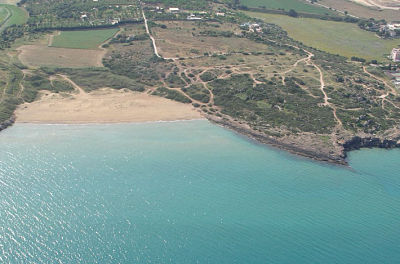
Marianelli is the closest and one of the most beautiful beaches of Vendicari. It is located right next to the ruins of Eloro.
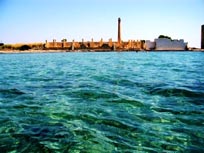
This is the wonderful beach that can be easily reached from the main entrance of Vendicari Reserve. Pure clean water and a huge sandy beach near the ruins of an old tuna fishery.
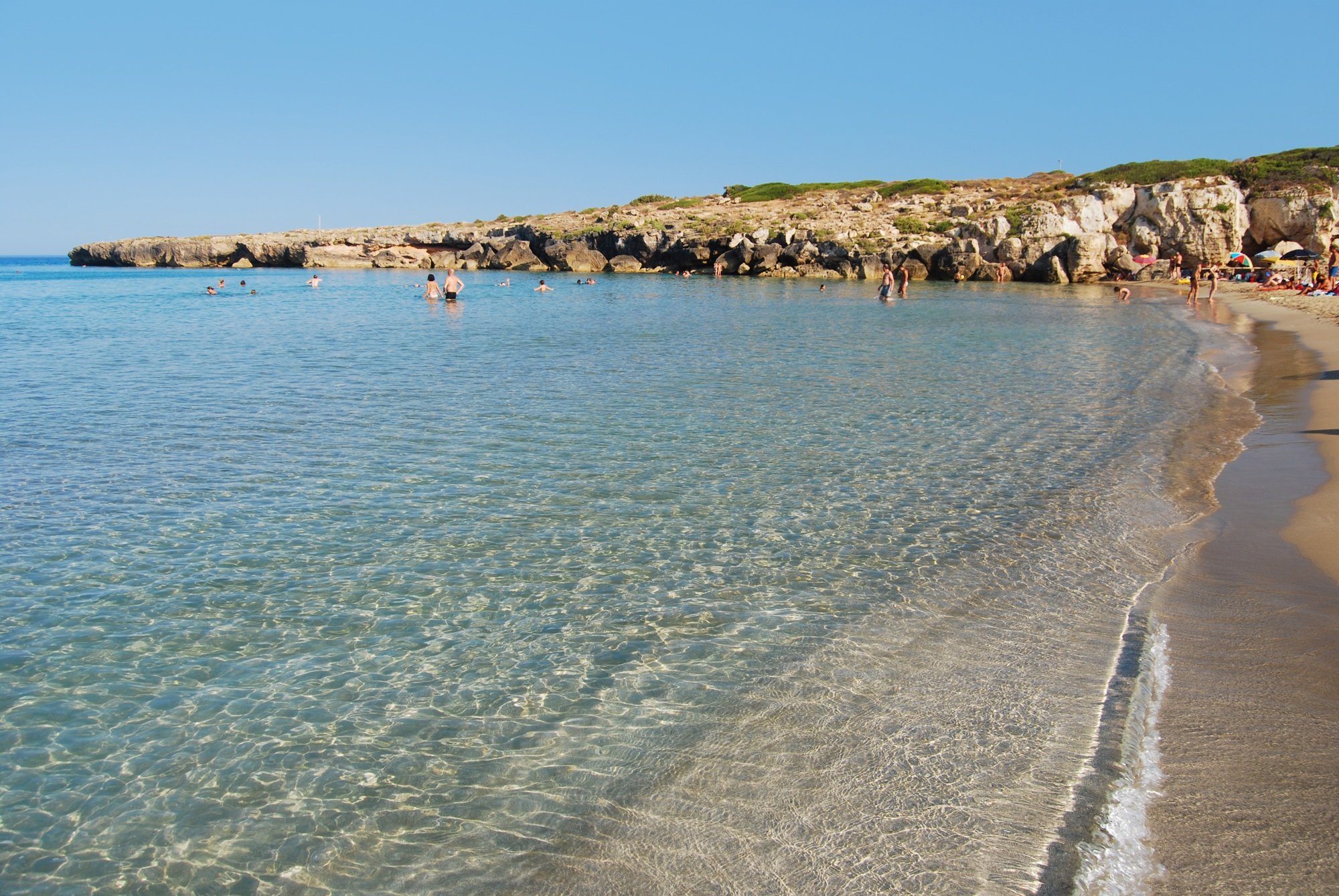
It is the most beautiful beach of Vendicari natural reserve, with golden sandy beaches and Caribbean Sea.
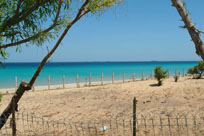
San Lorenzo – Case Cittadella is a breathtaking huge sandy beach with turquoise water, located in the south side of Vendicari reserve. Here in summer the Caretta Caretta turtles leave their eggs.
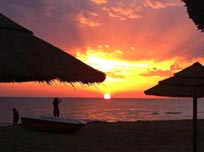
Beautiful, unspoiled beaches where the Mediterranean meets the Ionian Sea close to the most southern point of Sicily, in the province of Syracuse.
The natural reserve “Wildlife Oasis of Vendicari” was established in 1984 by the Sicilian Region. It’s located precisely halfway between Noto and Pachino (province of Syracuse) with a territory that extends for about 1512 hectares. Inside the reserve, an entire ecosystem lives undisturbed. You will find yourself frequently in front of breath-taking landscapes, dense vegetation that suddenly opens to a clear sea, very long and golden beaches, that in a few hundred meters become rocky cliffs and then deep sea. From the observation cabins, you can admire Flamingos, Herons, and Storks that hang here before reaching the definitive migratory destinations.
CavaGrande is a deep valley, called canyon by some people, formed by the non stop erosionof the Cassibile river during the passing of the centuries, the river created over the centuries a series of deep canyon in the limestone of the hyblean mountains. In the valley, has come to form a complex system of small waterfalls and natural reservoirs where often it’s allowed to swim in. It is about ten kilometers long, a maximum width of more than one thousand meters (at the confluence with the valley Passetti), and a maximum depth of over 300 meters. The highest altitude reached the plateau on the bed of the river is 520 m above sea level, but it is close to the viewpoint of Avola Antica, with its 507 meters, that the river reaches its maximum depth. In this section it reaches its maximum width of 1200 meters. In the 10 km length of the canyon, as mentioned, you can admire lots of lakes, with fresh and clear water, among which stand out for their beauty small lakes near Avola Antica accessible to the public through a historical scale, called Scala Cruci. Cava Grande is known almost entirely for the lakes accessible from the path «cruci-scale» from the viewpoint that goes down to the valley floor. But Cava Grande, in fact, it has dozens of trails that allow you to reach every part of it. Defended by inaccessible sheer cliffs of the quarry and the proximity of water, the Sicilians, who were maybe the first inhabitants of this place, built two rock villages, still difficult to reach and which now became part of the landscape. Around the thirteenth century BC, some citizens of south-eastern Sicily, perhaps driven by the more aggressive Italic citizen, preferred to take refuge in these inaccessible and well defended places. At least two rock settlements are known, the northern one that you can notice as soon as you get a view from the lookout, and the southern, in the almost opposite side. The first dates back to the XI-X BC, according to suggestion only second after Pantalica, where there are hundreds of cave tombs and early Christian tombs carved into the walls, arranged side by side, on six different parallel levels. The mouth of the river Cassibile is a hystorical place, as the captain Demosthenes in 413 BC with 6,000 Athenians had to surrender to the city of Siracusa. These places were exploited until the first half of the last century. In fact, just above the ponds there was a monastery, which you can still see the ruins of and the homes of some families of Canicattini as Bombaci and Bird, who drew sustenance from the production of olive, carob and almond. On the north side you can see a small cluster of cave dwellings. In the south there is a complex system of houses dug into the rock, placed side by side on six different parallel levels, connected by a system of tunnels and galleries. While the edge of the reserve, north-east, there are several ancient necropolis, in which were found rich grave goods and ceramic material: its unique decoration, called feathered or marbled, is part of the Ausonia culture which lived in the Aeolian islands and in eastern Sicily around the 1000 BC.
To learn more: http://www.cavagrandedelcassibile.it
Indirizzo: SS115 – 96013 Avola Siracusa
Coordinate: N 36.967587 – E 15.093988
La Penisola della Maddalena si estende pochi chilometri a sud della città di Siracusa con direzione NNW-SSE da capo Castelluccio a Capo Murro di Porco per circa sei chilometri fino a sfiorare il 37° parallelo N a Capo Murro di Porco, in definitiva da Punta della Mola a Punta Milocca.
Ente Gestore: Consorzio Plemmirio
Sede: Piazza Euripide, 21 – 96100 Siracusa (SR)
Tel. 0931/449310 0931/449310 Fax: 0931/449954
E-mail: info@plemmirio.it
Istituzione: 2004
The reserve is located on the outskirts of the city of Syracuse and it consists of the Ciane river and wetland of Saline, placed near its mouth. This area, along the Cold River, is the only site where the papyrus grows wild. The River Ciane, whose name comes from the greek Cyanos which means blue, was born in Cozzo del Pantano, in the floodplain of Siracusa, from the sources and heads of Pisimota and Pisima, this one is the main and looks like a pond of water blue, on whose banks grows the papyrus (Cyperus papyrus L.ssp.siculus). The River Ciane, after a road of 8 km long, partly natural and partly artificial as a result of numerous human, flows in the Great Harbour of Siracusa. Closer to it there are the Saline, that remained in operation until the eighties, are now abandoned and constitute an important wetland for migratory birds stop. The most important aspect of the flora of the reserve is the presence of papyrus (Cyperus papyrus L.ssp.siculus), a typical plant of North Africa, rather rare in Europe, which belongs to the family of Cyperaceae, and has an erect trunk, submerged in its lower part, with a triangular shape, 3 to 6 meters high, which leads to the top with an inflorescence terminating in a spikelet of flowers. This plant is related to the development of writing because its stem was produced by the papyrus paper of the ancient Egyptians. About the origin of the papyrus in Sicily there are two hypotheses: one feels is that it was a species introducted here and then naturalized, the other says it is a native species of this land. Along the banks of the river it is also the common reed (Phragmites australis), the purple loosestrife (Lythrum salicaria), the water mint (Mentha aquatica), watercress (Nasturtium officinale) and sedges (Carex pendula and Carex riparia). The component tree is made up mainly of ash (Fraxinus excelsior) which often, their bark numerous lichens. In the river are the Potamogeton and Ceratophyllum together with duckweed (Lemna minor) and Azolla caroliniana, an alien species introduced a few years ago. The saltpans are plant species adapted to the high salinity such as Salicornia (Salicornia fruticosa), the enula bacicci (Inula chritmoides), the Sueda fruticosa, the wallflower wild (Matthiola tricuspidata), the Obione (Halimione portulacoides) the spiny rush (Juncus acutus) and various species of Limonium. The pre-reserve area has the species of eucalyptus (Eucalyptus globulus) planted in the years 50-60. Cold, clear waters of the River Cyane living brown trout (Salmo trutta), along with mullet (Mugil cephalus), turtles (Emys orbicularis) and crab (Potamon fluviatile). The salt marshes are important stopover for migratory birds: herons (AREDA cinerea), Little Egret (Egretta garzetta), knight of Italy (Himantopus himantopus), Water Rail (Rallus aquaticus), coot (Fulica atra), teal (Anas crecca), wigeon (Anas penelope), mute swan (Cygnus olor), flamingo (Phoenicopterus ruber), spatula (Platalea leucorodia), osprey (Pandion haliaetus) and cormorant (Phalacrocorax carbo). Were also spotted rare species such as the tern Ruppell (Thalasseus bengalensis), the Terek sandpiper (Xenus cinereus) and the Red-necked Phalarope (Phalaropus lobatus). Close to the reserve there are (Ixobrychus minutus), moorhen (Gallinula chloropus), the Water Rail (Rallus aquaticus), kingfisher (Alcedo atthis), the reed warbler (Acrocephalus scirpaceus) and the pendulum (Remix pendolinus).
VISIT AND BOX OFFICE TIME (Tel. 0931. 65201 – 0931. 464255 – 0931. 462452):
for further info please contact the office:Ufficio Turistico Locale, Via Maestranza n. 33 – 96100 Siracusa
Indirizzo: Traversa Testa Pisima – 96100 Siracusa
Coordinate: N 37.042238 – E 15.235304
56° Festival Teatro Greco di Siracusa | 08 Mayo| 05 Julio 2020
Le verità nascoste. Baccanti, Ifigenia in Tauride, Nuvole
Nelle tre opere si possono individuare “verità nascoste”, tema del ciclo di spettacoli del prossimo anno, scene e personaggi che si presentano in maniera opposta rispetto a quello che sono davvero.
Le Baccanti di Euripide, Ifigenia in Tauride di Euripide e la commedia Le Nuvole di Aristofane sono i testi scelti per la 56ª stagione della Fondazione Inda. Nelle tre opere si possono individuare verità nascoste, tema della Stagione 2020, scene e personaggi che si presentano in maniera opposta rispetto a quello che sono davvero. A partire dall’ultima tragedia di Euripide, Le Baccanti, un mosaico impossibile da comporre, dove ogni verità adombra il suo contrario, a Ifigenia in Tauride, dove ogni realtà cui si credeva si rivela falsa, alle Nuvole, dove ogni fede in certe soluzioni, in certa “nuova cultura”, si rivela illusoria.
Per info e biglietti cliccare qui
BIGLIETTERIA FONDAZIONE:
presso Corso Matteotti 29, Siracusa
Orari biglietteria: lunedì/venerdì
Orari: 10/13 – 15/17
Tel: 800 542644
Tel: +39 0931 487248
Il patrimonio artistico dei fratelli Vaccaro, famosi pupari siracusani, trova spazio in questo museo. L’associazione “Vaccaro-Mauceri” apre il sipario sull’operato dei fratelli Vaccaro e sul loro mondo fantastico, dove trovano posto cavalieri cristiano e saraceni, maghi, streghe e creature mostruose. Un percorso arricchito da schede storiche che ripercorrono i punti salienti della loro storia, dalla nascita del laboratorio di Vicolo dell’Ulivo, all’esordio dei fratelli Mauceri. Un libro aperto su alcune suggestive pagine di storia siracusana, oggi a disposizione di tutti.
PER INFORMAZIONI: Tel. 0931 1995531 Cell. 347 3810826
ORARI DI APERTURA:
Aperto da marzo a novembre e periodo natalizio- Dal lunedì al sabato
Da marzo a maggio Ore 11:00 > 13:00 / 16:00 > 18:00
Da giugno ad agosto Ore 11:00 > ore 18:00 (orario continuato) (Chiuso 15 agosto) Da settembre a novembre ore 11:00 > 13:00 / 16:00 > 18:00 Apertura straordinaria Dal 15 dicembre al 15 gennaio ore 11:00 > 13:00 / 16:00 > 18:00 (chiuso la mattina del 25-26 dic. e 1 gen.)
TARIFFE
Intero € 3,00 Ridotto € 2,00 (da 3 a 12 anni) Disabili € 2,00 Residenti SR € 1,00 Bambini sotto i 3 anni Gratis

© 2020 Hotel Posta Siracusa - Privacy & Cookie policy