





It is the one and only museum in Italy named and dedicated to Archimede, a brilliant genius from Siracusa. Joined by Leonardo, his natural heir from Firenze.
A great innovation within cultural scene: an accurate and studied museum tour where are displayed, by comparison, 15 works of both masterminds, machines still perfectly working such as the Weigher, Spiral and Screw.
Two mythical mathematicians, twin pillars of science united by the love of knowledge.
OPENING TIME
Open daily
10:30 – 19:00
TICKET PRICES
Full € 6,50
Reduced € 4,50
School groups € 4,50
LEONARDO DA VINCI & ARCHIMEDE MUSEUM – SIRACUSA
Via Vincenzo Mirabella 31, 96100, Siracusa (Italy)
+39 0931.1855824
+39 388.1565746
info@leonardoarchimede.com
The Castle Euryalus represents one of the largest and most complete military works of the Greek period. The name derives from the Greek word Eurvelos (“large base nail “), which presumably refers to the shape of the saddle rock on which the castle stands. The fortress, which occupies about 15,000 square meters, was probably built at the behest of Dionysius, tyrant of Syracuse, between 402 and 397 BC. to complete the great defensive system running along the edge of the plateau of Epipoli. Over time, the castle underwent numerous transformations and extensions by the Romans and finally by the Byzantines that, to defend themselves from the Arabs, demolished parts of the castle and they utilized the materials to turn it into a massive quadrangular fortress. A system of three moats barred access to the castle, which is formed by a trapezoidal donjon protected by five towers. The building had several strategic elements in order to surprise any attackers. The only entrance was hidden by clever architectures that hindered the view; moreover the castle was crossed by a series of tunnels which allowed the army to move quickly from one part to the other of the fortress.
Inside the building they also had kitchens, housing, warehouses and tanks for soldiers.
INFO
Tel. 0931.711773
PRICE
4.00 € Adult – 2,00 € (età compresa tra i 18 e i 25 anni) e per i docenti.
free for under 18
Just outside the ancient walls of Siracusa, near the Archaeological Park Neapolis and the impressive Madonna delle Lacrime’s Sanctuary, stands the amazing Basilica named to San Giovanni Evangelista. It is a stunning open air church with subterranean treasures: the painted San Marciano Crypt and the San Giovanni Catacombs. Catacombs’ underground tunnels are so secretive and fascinating, are carved exactly into the limestone rocks and create a sacred labyrinth ruled by silence. It is an essential place to visit and to enjoy an intriguing and exciting experience back in the past of Siracusa.
An underground path will lead you to discover the largest catacombs in Siracusa, the second largest in the world after Roman ones. An extraordinary place of worship rich in beauties and history. Through its large galleries you will feel and experience a climate full of sacredness, and you will discover the secret of life beyond death, surrounded by the peacefulness of a millennial-sleep.
Are guaranteed guided tours all year, and during summertive very suggestive night tours and night shows.
BOX OFFICE and TOURS TIME:
from tuesdays to sundays: 9:30 a.m. to 12:30 p.m. and o2:30 p.m. to 05:30 p.m.
TICKETS PRICES (guided tour included):
Full: € 6.00
Reduced (under 16 and over 65): € 4,00
Pilgrims: € 3,00
CONTACTS
Tel 0931 .64694 – Fax 0931.66751 – info@kairos-web.com
School groups: € 2,00
Within the Archaeological Park Neapolis, are certainly preserved the most important and the ancient vestiges of Siracusa, essential evidences of the polis past.
Due to the digging works of mid-1900s the Neapolis Park return to be in current conditions: it is an extraordinary environmental framework, an area of 35 hectares where are found the principal ancient monuments exactly in the core of the modern Siracusa. The settlement of the archaeological area respect the old project of Tyrant Dionisio I, who turned Neapolis area in a monumental zone in 405 b.C.
You will discover:
The most beautiful beaches of Sicily, on the south shore of Siracusa. Some of them are easily locatable and accessible by private car or public transport.
Not really beaches in Siracusa. Of course you can swim and do sunbath in Ortigia.
But if you’d like to enjoy some of the most beautiful beaches in Siracusa, you don’t have to move too much.
Some of them are accessible by public transport, bus and train station are just 50 meters far away from the Hotel. Or by private car and bikes, following easy road signs.
Within small walking distance, it is a great solution to enjoy sunbathing and let cool by sea breeze just in town. This Solarium (summertime installation) is currently the only one in Ortigia Island with free admission. It has an unbeatable location, with an excellent sun exposure all day long

A very tiny and artificial pebbly beach, made of stones smoothened and polished by sea and wind. It is accessible from a long stairway down waterfront. It is enclosed by aring of breakwaters, where you can easily enjoy morning sunbathing. A quiet place with a unique viewpoint.

Probably the most beautiful beach in Siracusa. Small bay, white shining smooth sand and spectacular crystal clear sea.
HOW TO GET THERE
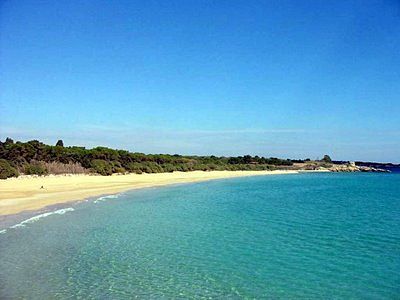
The most popular and fashionable beach in Siracusa. All along the coast there are beach clubs, resorts and public areas to enjoy swimming and sunbathing. After sunset, it becomes the ideal destination for nightlife: open clubs, discos and pubs, dedicated to visitors of all ages, and is very popular among locals and travellers.
HOW TO GET THERE
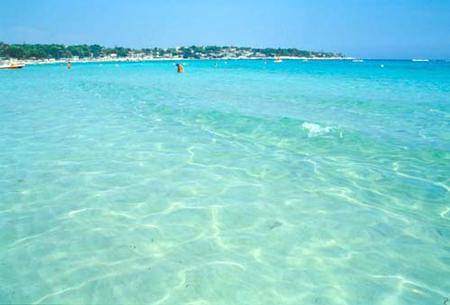
A natural reserve located along the south-eastern coast of Siracusa. Rocky shoreline, beautiful cliffs, fascinating caves, small beaches, natural cavities and arches. Rich in suggestive marine flora and fauna biodiversity, with emerald green and turquoise waters. It is the ideal location for scuba diving lovers.
HOW TO GET THERE
It can be reached only by car or motorbike (10 minutes far from Siracusa).
After crossing bridge Umberto, go straight on and past the train station; once you are at the big roundabout turn left on Via Columba, then right on Via Elorina. Now you are on the right way. Follow road signals up to Plemmirio Natural Reserve.

This coast, presents an alternation of low and high rocky cliffs overlooking the sea, white sandy coves and several underwater sea caves surrounded by crystal waters. Offshore, there is a deserted island that can be reached by swimming. In a small bay you will also find a tiny harbour. All the area is an enchanting place where you can enjoy sunbathing, snorkeling and simply lose yourself in a fascinating and unspoiled nature.

It is a wonderful beach close to river Cassibile. There are no beach resorts, just a wild one with free entrance. But the parking is quite expensive (the only and one solution to leave your vehicule).
HOW TO GET THERE
It can be reached only by car or motorbike (15 minutes far from Siracusa).
After crossing bridge Umberto, go straight on and pass the train station; once at the big roundabout follow road signs towards “Noto-Avola” and all the directions (Catania included). Keep going straight on, past the cemetery and then turn left following road signals to Gela-Noto-Avola Rosolini. Now you are on the motorway Siracusa-Noto-Avola-Rosolini; road exit name is CASSIBILE, which lead you towards the SS115 to Avola. After 3.5 km you will cross a bridge, you will see a rural building named “Foce del Cassibile”, so slow down and turn right following the signal “Pineta of Gelsomineto”.
After few meters you reach parking entrance.
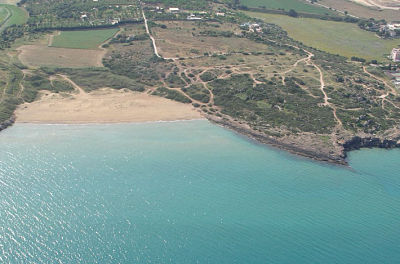
Marianelli is the closest and one of the most beautiful beaches of Vendicari. It is located right next to the ruins of Eloro.
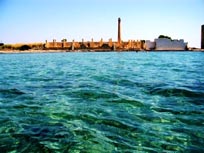
This is the wonderful beach that can be easily reached from the main entrance of Vendicari Reserve. Pure clean water and a huge sandy beach near the ruins of an old tuna fishery.
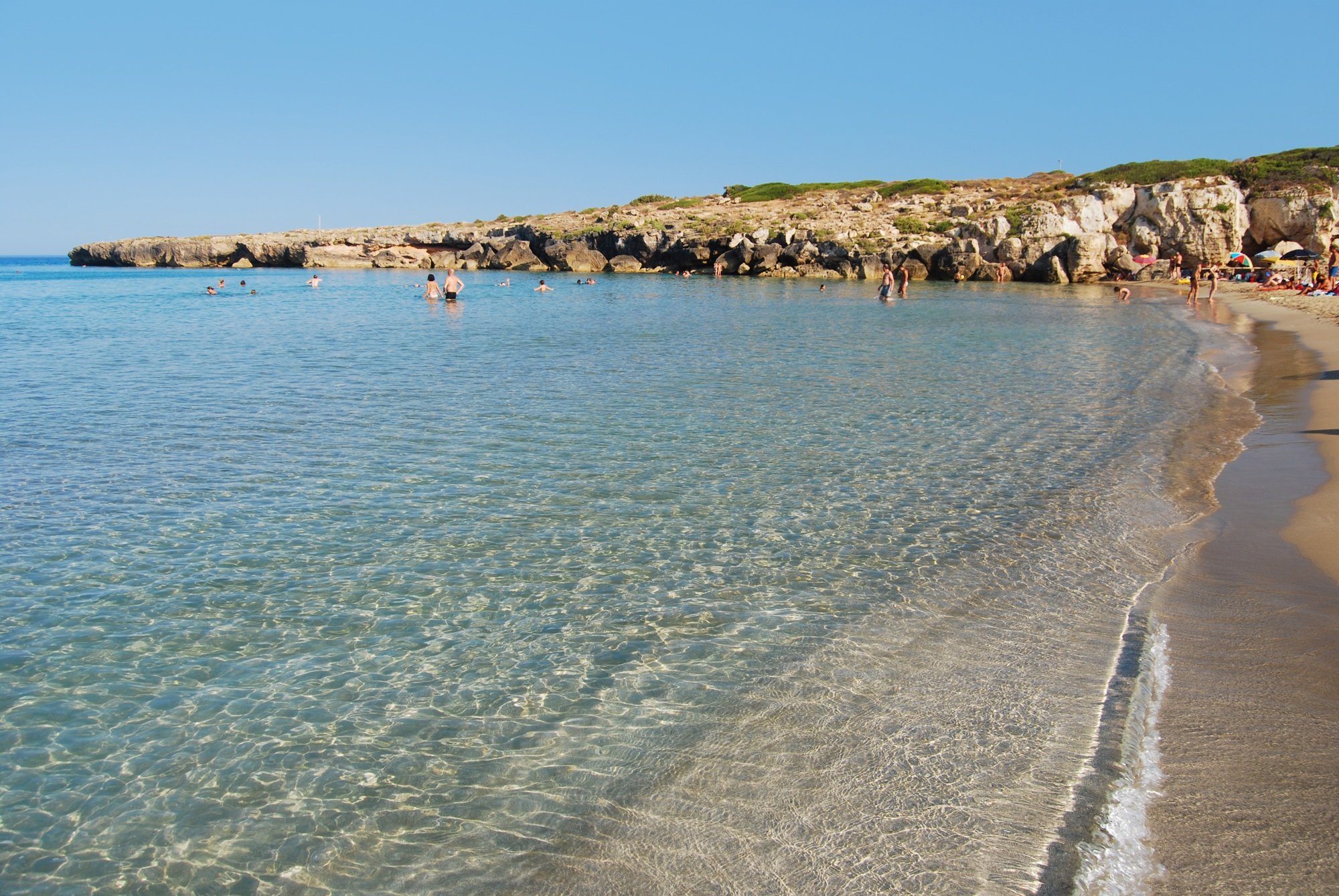
It is the most beautiful beach of Vendicari natural reserve, with golden sandy beaches and Caribbean Sea.
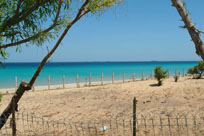
San Lorenzo – Case Cittadella is a breathtaking huge sandy beach with turquoise water, located in the south side of Vendicari reserve. Here in summer the Caretta Caretta turtles leave their eggs.
Beautiful, unspoiled beaches where the Mediterranean meets the Ionian Sea close to the most southern point of Sicily, in the province of Syracuse.
The natural reserve “Wildlife Oasis of Vendicari” was established in 1984 by the Sicilian Region. It’s located precisely halfway between Noto and Pachino (province of Syracuse) with a territory that extends for about 1512 hectares. Inside the reserve, an entire ecosystem lives undisturbed. You will find yourself frequently in front of breath-taking landscapes, dense vegetation that suddenly opens to a clear sea, very long and golden beaches, that in a few hundred meters become rocky cliffs and then deep sea. From the observation cabins, you can admire Flamingos, Herons, and Storks that hang here before reaching the definitive migratory destinations.
CavaGrande is a deep valley, called canyon by some people, formed by the non stop erosionof the Cassibile river during the passing of the centuries, the river created over the centuries a series of deep canyon in the limestone of the hyblean mountains. In the valley, has come to form a complex system of small waterfalls and natural reservoirs where often it’s allowed to swim in. It is about ten kilometers long, a maximum width of more than one thousand meters (at the confluence with the valley Passetti), and a maximum depth of over 300 meters. The highest altitude reached the plateau on the bed of the river is 520 m above sea level, but it is close to the viewpoint of Avola Antica, with its 507 meters, that the river reaches its maximum depth. In this section it reaches its maximum width of 1200 meters. In the 10 km length of the canyon, as mentioned, you can admire lots of lakes, with fresh and clear water, among which stand out for their beauty small lakes near Avola Antica accessible to the public through a historical scale, called Scala Cruci. Cava Grande is known almost entirely for the lakes accessible from the path “cruci-scale” from the viewpoint that goes down to the valley floor. But Cava Grande, in fact, it has dozens of trails that allow you to reach every part of it. Defended by inaccessible sheer cliffs of the quarry and the proximity of water, the Sicilians, who were maybe the first inhabitants of this place, built two rock villages, still difficult to reach and which now became part of the landscape. Around the thirteenth century BC, some citizens of south-eastern Sicily, perhaps driven by the more aggressive Italic citizen, preferred to take refuge in these inaccessible and well defended places. At least two rock settlements are known, the northern one that you can notice as soon as you get a view from the lookout, and the southern, in the almost opposite side. The first dates back to the XI-X BC, according to suggestion only second after Pantalica, where there are hundreds of cave tombs and early Christian tombs carved into the walls, arranged side by side, on six different parallel levels. The mouth of the river Cassibile is a hystorical place, as the captain Demosthenes in 413 BC with 6,000 Athenians had to surrender to the city of Siracusa. These places were exploited until the first half of the last century. In fact, just above the ponds there was a monastery, which you can still see the ruins of and the homes of some families of Canicattini as Bombaci and Bird, who drew sustenance from the production of olive, carob and almond. On the north side you can see a small cluster of cave dwellings. In the south there is a complex system of houses dug into the rock, placed side by side on six different parallel levels, connected by a system of tunnels and galleries. While the edge of the reserve, north-east, there are several ancient necropolis, in which were found rich grave goods and ceramic material: its unique decoration, called feathered or marbled, is part of the Ausonia culture which lived in the Aeolian islands and in eastern Sicily around the 1000 BC.
To learn more: http://www.cavagrandedelcassibile.it
Indirizzo: SS115 – 96013 Avola Siracusa
Coordinate: N 36.967587 – E 15.093988
Visiting the necropolis of Pantalica, located in the north east of Palazzolo Acreide (ancient Akrai) is not only a trip in an archaeological site, because its characteristics are really unique. It is a place where history is as nature, in which archeology is done for listening and silently observing the presence of ancient people. It does not matter if the news about the Sicilians, who lived in Sicily since prehistoric times, are not sufficient for getting a clear view of the city existed between the thirteenth and eighth century B.C., and indeed, the absence of reliable data and increases the number of curiosities, assumptions, questions, desire and pleasure to investigate, even with his eyes, the whys and hows of those repeated and evocative buildings: the necropolis . Long before the Greeks first settled on the island to consecrate the history, the commercial and cultural development, it was inhabited by peoples inside to shores lapped by the sea preferred, or were “induced” to choose from, the inner regions. Between the beginning of the story and the unification under the rule of Rome many people were, next to the Etruscans, the Phoenicians and Greeks, Italic civilizations. It is so that we can acknowledge the existence of people whose knowledge is still under construction because only recently has the attention of the studies. Certainly, in view of these cultures in the making Italic, where the Sicilians should be placed, the cultural and artistic events more frequent and obvious are those funeral related mostly to the tombs and funerary objects. The visit of Pantalica can have as a starting point the town of Ferla, which unfolds before a journey traveled by car through a gradual ascent curves pan, then walked to a rest at the entrance to the ancient city (saddle Filiporto). From here you glimpsed traces of the fort and takes the path that leads to the ruins of the Byzantine era and the valley floor.
VISIT AND BOX OFFICE TIME:
Everyday from 7.00 a.m to 07.00 p.m.
Saturday and Sunday only under reservation, with tour guide.
NOTE: In case of rain or bad weather, the whole area will remain closed for the three days after.
I testi di questa scheda sono stati validati dalla Soprintendenza ai Beni Culturali di Siracusa
Indirizzo: Pantalica 96010 Sortino SR
Coordinate: N 37.125257 – E 15.016598
The reserve is located on the outskirts of the city of Syracuse and it consists of the Ciane river and wetland of Saline, placed near its mouth. This area, along the Cold River, is the only site where the papyrus grows wild. The River Ciane, whose name comes from the greek Cyanos which means blue, was born in Cozzo del Pantano, in the floodplain of Siracusa, from the sources and heads of Pisimota and Pisima, this one is the main and looks like a pond of water blue, on whose banks grows the papyrus (Cyperus papyrus L.ssp.siculus). The River Ciane, after a road of 8 km long, partly natural and partly artificial as a result of numerous human, flows in the Great Harbour of Siracusa. Closer to it there are the Saline, that remained in operation until the eighties, are now abandoned and constitute an important wetland for migratory birds stop. The most important aspect of the flora of the reserve is the presence of papyrus (Cyperus papyrus L.ssp.siculus), a typical plant of North Africa, rather rare in Europe, which belongs to the family of Cyperaceae, and has an erect trunk, submerged in its lower part, with a triangular shape, 3 to 6 meters high, which leads to the top with an inflorescence terminating in a spikelet of flowers. This plant is related to the development of writing because its stem was produced by the papyrus paper of the ancient Egyptians. About the origin of the papyrus in Sicily there are two hypotheses: one feels is that it was a species introducted here and then naturalized, the other says it is a native species of this land. Along the banks of the river it is also the common reed (Phragmites australis), the purple loosestrife (Lythrum salicaria), the water mint (Mentha aquatica), watercress (Nasturtium officinale) and sedges (Carex pendula and Carex riparia). The component tree is made up mainly of ash (Fraxinus excelsior) which often, their bark numerous lichens. In the river are the Potamogeton and Ceratophyllum together with duckweed (Lemna minor) and Azolla caroliniana, an alien species introduced a few years ago. The saltpans are plant species adapted to the high salinity such as Salicornia (Salicornia fruticosa), the enula bacicci (Inula chritmoides), the Sueda fruticosa, the wallflower wild (Matthiola tricuspidata), the Obione (Halimione portulacoides) the spiny rush (Juncus acutus) and various species of Limonium. The pre-reserve area has the species of eucalyptus (Eucalyptus globulus) planted in the years 50-60. Cold, clear waters of the River Cyane living brown trout (Salmo trutta), along with mullet (Mugil cephalus), turtles (Emys orbicularis) and crab (Potamon fluviatile). The salt marshes are important stopover for migratory birds: herons (AREDA cinerea), Little Egret (Egretta garzetta), knight of Italy (Himantopus himantopus), Water Rail (Rallus aquaticus), coot (Fulica atra), teal (Anas crecca), wigeon (Anas penelope), mute swan (Cygnus olor), flamingo (Phoenicopterus ruber), spatula (Platalea leucorodia), osprey (Pandion haliaetus) and cormorant (Phalacrocorax carbo). Were also spotted rare species such as the tern Ruppell (Thalasseus bengalensis), the Terek sandpiper (Xenus cinereus) and the Red-necked Phalarope (Phalaropus lobatus). Close to the reserve there are (Ixobrychus minutus), moorhen (Gallinula chloropus), the Water Rail (Rallus aquaticus), kingfisher (Alcedo atthis), the reed warbler (Acrocephalus scirpaceus) and the pendulum (Remix pendolinus).
VISIT AND BOX OFFICE TIME (Tel. 0931. 65201 – 0931. 464255 – 0931. 462452):
for further info please contact the office:Ufficio Turistico Locale, Via Maestranza n. 33 – 96100 Siracusa
Indirizzo: Traversa Testa Pisima – 96100 Siracusa
Coordinate: N 37.042238 – E 15.235304

© 2020 Hotel Posta Siracusa - Privacy & Cookie policy